A Step-By-Step Process To Getting In A 'Flow' State During Our Chess Games
Introduction
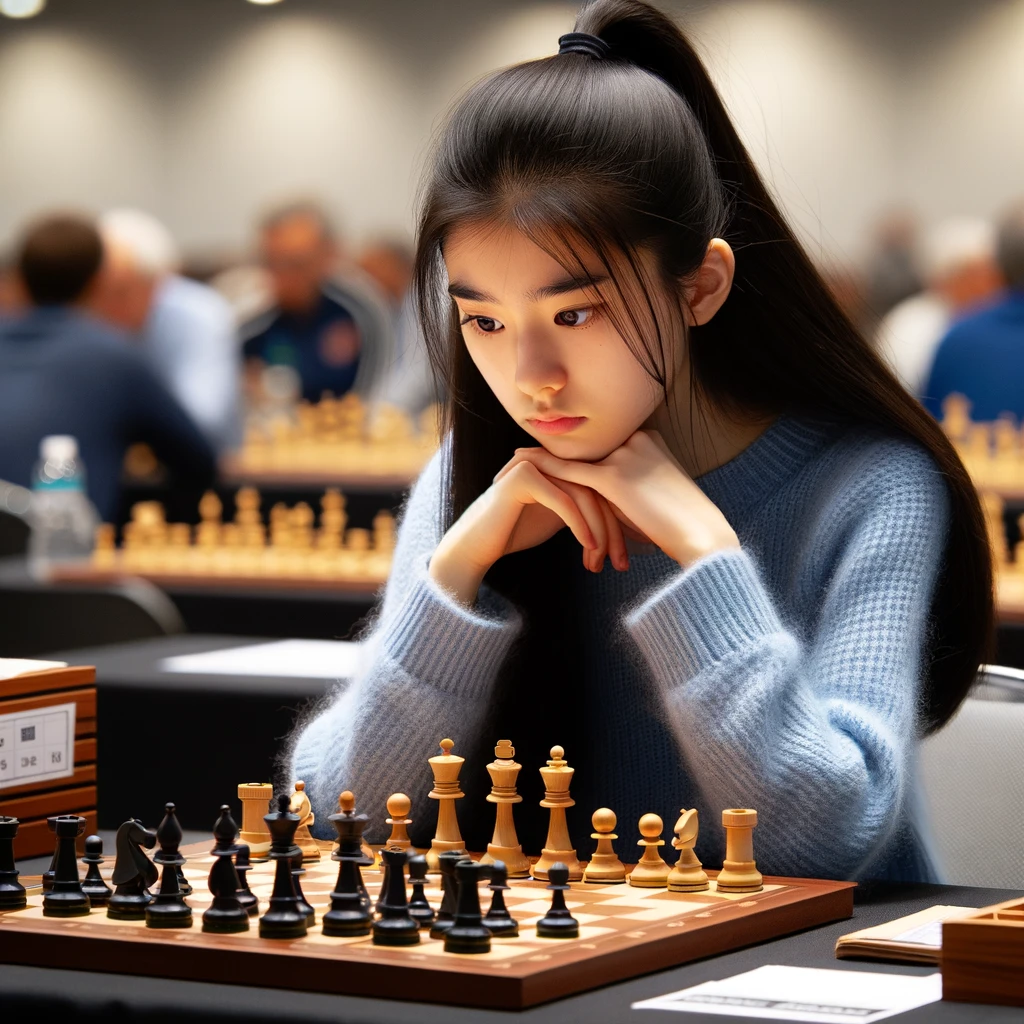
In this post, I will describe how to get in 'the zone' or 'flow' during our chess games.
'The Zone' refers to a state of complete focus and concentratio...

The candidates are well under way, drawing the interest and attention of chess enthusiasts all over the world. This penultimate event, leading into the next World Chess Championship, is a highlight for all chess players.
!! Watch the CCC C...

#vienna #mainline #heyde_variation
As a Vienna Game and Vienna Gambit player with the White pieces, it becomes critically important to learn how to play the Main Line once you move into the intermediate level. Simply, those further alon...

#indiangame #maddigangambit #doubleblunder #recovery
For the best performance, chess and wine don't mix... ♟️➕🍷❓🚫 This game is a cautionary tale!
However, if one's goal is to have fun while meeting a friend, it's perfectly fine. As us...

Beginning a game of chess, every move holds immense significance for the course of the game. One crucial decision revolves around the deployment of knights, those versatile pieces capable of influencing various areas of the board. In this guide, w...

Hello everyone, welcome back to my 11th blog post! This is the 10th and final volume of my Road To Master series.
As you can probably tell, I did become a National Master. Depending on when you're reading this blog, I might or might not have the...
Recently, I released a series called 'Stop Making Blunders!' All the episodes are available on YouTube. I talk about most common tactics in chess, calculation, tactical motifs, time management and more.
I have a special bonus for you! Enhance yo...
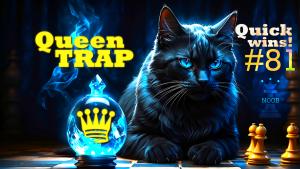
#quickwins #vienna #bishopsac #brilliant
chess noob Quick Wins! is a series of short videos, to demonstrate very quick wins! As a beginner, you become aware of the Scholar's Mate and the Fool's Mate, but neither of these show up i...
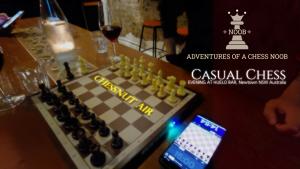
#chessnutair #otb #casual #vienna
🔥 Chessnut Store (Affiliate Link): https://www.chessnutech.com?sca_ref=4294516.IoYAy1V8Gt 🔥 Or use my coupon code for a discount on checkout: CHESSNOOB64
I suspect that for most of us, chess is l...
“In any given moment, we have two options: to step forward into growth or to step back into safety” – Abraham Maslow
How do you keep your competitive spirit alive when life happens, and you’re in the deepest dark? Man...
The stories of successful people with disabilities have always inspired people due to the individuals being able to pull off personal triumphs over their limitations and achieve high. From the likes of Stephen Hawking, and Helen Keller to Stevie W...
Hey everyone, I am here in Toronto getting ready for reporting on the FIDE Candidates Tournment. Can't wait to see all of the action live and in person! I wrote a SUB-STACK post about my arrival here in the beautiful Toronto! Had over there to che...
With the Candidates Tournament in Toronto underway, I'd like to share some inside information from the previous one in Madrid in 2022, especially as I had a priviledged position to follow it from.
As I wrote in my blogpost, I had the privil...
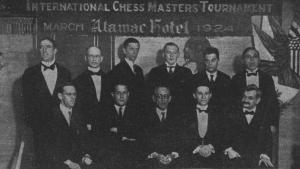
This is the quintessential tournament of the decade — much as St Petersburg 1914 is for the 1910s and AVRO for the 1930s. It included all the leading players of the era, with the exception of Rubinstein, and was a thrilling, fast-paced race ...
A common challenge when trying to improve at something is that we place conditions on what we'll do to improve. We see limited options (or even only one choice) for overcoming an obstacle because we 𝘢𝘶𝘵𝘰𝘮𝘢𝘵𝘪𝘤𝘢𝘭𝘭𝘺 𝘳𝘶𝘭𝘦𝘥 𝘰𝘶𝘵 𝘦𝘷𝘦𝘳𝘺𝘵𝘩𝘪𝘯𝘨 𝘦𝘭𝘴𝘦. A c...
#english #fourknights #rooksac #brilliancy
In the last video and article, I played for Team Sydney against my opponent for Team Melbourne in an Australian interclub tournament. This article describes our second match, where I had the bl...
The Corporate Esports Association is excited to host the next seasons of the US States Chess Cup and the Corporate Charity Championships! Starting at the end of April until mid-June, teams of US State Federations and Corporate Chess Clubs will tes...
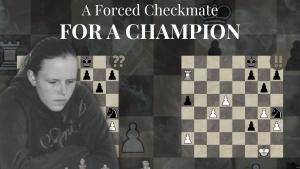
Chess is a game that has been played for centuries. Some people spend years trying to perfect their play while some people make playing amazing moves look so effortless. Unfortunately, some impressive careers are cut short. In the case of Jessica ...
Great news! Following strong demand the docuseries Through the Mirror of Chess: A Cultural Exploration is now available on Amazon Prime. Perhaps it helped that the film was the recipient of the Best Documentary Award by Chess Journalists of Americ...
In Winner's POV, we take a look at tournaments from the 19th century and see the games that allowed the top player to prevail. Some tournaments will be known and famous, others will be more obscure - in a time period where competition is scarce, I...
#nimzowitsch #viennagambit #bishopsac #doublecheck
I recently played this club tournament match; I had the White pieces and played for Team Sydney, while my opponent played for Team Melbourne!
Against (1. e4), my opponent played the u...
Afternoon everyone. Another bit of self-indulgence today .My regular hardy band of readers will know how my head works. One chess idea leads to a stream of games jumping into my head.
This week a friend of mine posted a game where I spotted a ni...
I didn’t want to write anything about round three; I wasn't really paying attention, maybe because of the topsy-turvy day yesterday at round two. But you are reading this right now because I didn’t go to sleep; I kept two tabs open, wh...
#scotch #scotchgambit #quickwins
chess noob Quick Wins! is a series of short videos, to demonstrate very quick wins! As a beginner, you become aware of the Scholar's Mate and the Fool's Mate, but neither of these show up in real g...
Backspaced a thousand times, I still cannot find appropriate words to describe the agony players are experiencing right now in Toronto because, unlike yesterday, round two was full of drama, brilliant moves, time trouble, suspense, and whatnot! Al...