#french #steiner
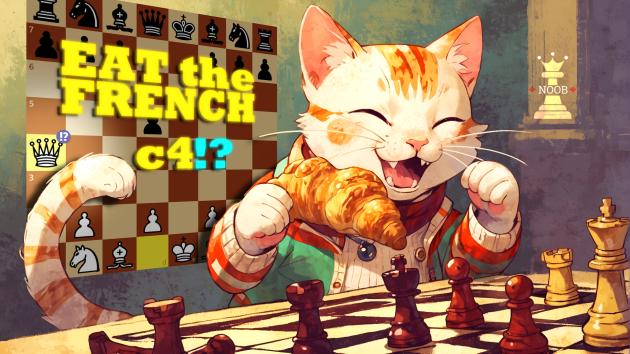
Do you like playing against the French Defense? I certainly don’t! As a (1. e4) player, the French Defence (1… e6) is my Achilles’ heel. When I look at my stats, I lose against the French Defense arou...
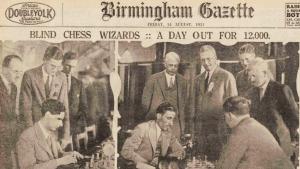
Afternoon everyone. Back with part three. A lot less text this time, but my usual bagful of games and pictures. Same rules as the last two - drop in and out when you have 10 minutes.
So last time I mentioned Theo Tylor and Rupert Cross. You can ...
Do you want to learn the correct lessons from each chess game you play?If so, you've come to the right place!One of the main reasons that a chess player fails to improve is that they repeat the same mistakes in their chess games. Analyzing ou...

#ruylopez #beginners #quickwins
chess noob Quick Wins! is a series of short videos, to demonstrate very quick wins! As a beginner, you become aware of the Scholar's Mate and the Fool's Mate, but neither of these show up in real ga...
A few weeks ago, I saw the total solar eclipse over North America. It was an incredible, surreal experience. Yet what made it even more memorable was coincidentally, the night before the eclipse, I found something equally rare and hard to belie...

Welcome back to the ‘Who is?’ series, where we interview chess streamers about their chess journey, how they got into streaming, and anything and everything they’re willing to share about their life off-stream and off-board!Today...
O.K. so I am back with part two - a mass of stuff here, so same rules as last time!! Dip in and out when you have time and I hope you enjoy what is here. I have decided to make it three parts, so more next time, with a lot of games. Mainly text th...
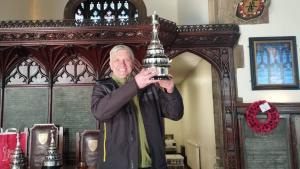
Last weekend a Bristol Centenary & WECU Championship chess tournament was played in Bristol, UK.
In the open section of this tournament 63 players competed for the West of England Chess Champion title.
Besides the participation of two inte...
From a sporting perspective, these were the storylines in chess in the mid-1920s: 1.the invincibility of Capablanca, the question of whether anybody would ever come close to him; 2.the surprising resurgence of Lasker, winning a pair of internation...
A big part of the ‘mental game’ is learning how to manage our emotions, so that we control our actions rather than being a ‘slave’ to our emotions.
The influence of our emotions is well summarised by the ‘Law ...
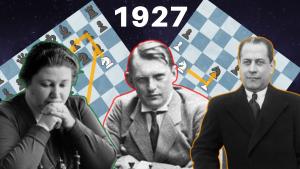
In the year 1927, two of the greatest chess players of all time faced off in an epic battle. The reigning champion, Jose Raul Capablanca, was up against the determined challenger, Alexander Alekhine, who was vying for the coveted title of World Ch...
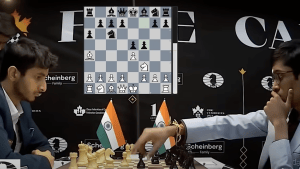
Dear chess lovers, in the recent FIDE Candidates' Tournament 2024, Praggnanandhaa played the ....f5 variation against Vidit's Ruy Lopez. In the chessgames.com database, the first instance of this opening being played is a correspondence game from ...
Hello there, welcome to the Lightning Reports! Y'all know how it is... if I play otb chess, y'all get a blog. That's the deal. Indeed I did receive the opportunity recently to play in an amazing and fierce event in which the average rating of all ...
#ruylopez #jaenischgambit #blunder #brilliancy #rooksacrifice
A proposition:
Conceptualising the endpoint of chess in a trinary fashion, only in terms of a win, loss, and draw, fails to capture the romance of chess!
— vitualis the...
Discover how to defend better in your chess games
Introduction
The importance of defending well in chess is a pattern in the games of both my students and the best chess players in the world. As the saying goes in team sports, 'Offence w...
#carokann #chessnutair #queenblunder #recovery
🔥 Chessnut Store (Affiliate Link): https://www.chessnutech.com?sca_ref=4294516.IoYAy1V8Gt 🔥 Or use my coupon code for a discount on checkout: CHESSNOOB64
One of the things that I rea...
Good Afternoon Everyone. In times gone by I used to put together stupidly large, properly researched, articles. This is one of many that I never got round to putting on the page. So, loads here. Best advice - pop in and out when you have time to s...
There's a big part about Chessable courses that we sometimes forget - they're living things. Mistakes are fixed, theory gets updated, and authors react to the latest student questions.
So in our new series Going Above and Beyond, we're hi...
Hello,
I would like to invite you to participate in our upcoming event with exciting prizes! Join the club: https://www.chess.com/club/mat-bobulas-chess-school
The Arena tournament follows a 5+5 format, lasting for 1 hour. It kicks off o...
The last couple of months were very busy for me. I solved most of the challenges and I am back to playing, analyzing, creating exericises and sharing it with you. I am also available for coaching sessions. If you want to improve your chess and wou...
Hi!
I opened the Game review page yesterday and was in for a bit of a surprise - my three moves in a row were marked as Excellent by the computer.
Here's the game:
Thanks for reading!
#ruylopez #jaenisch #queentrap #dune #quickwins
chess noob Quick Wins! is a series of short videos, to demonstrate very quick wins! As a beginner, you become aware of the Scholar's Mate and the Fool's Mate, but neither of these sh...
This is the first post in a series of the most typical mistakes I encounter as a chess coach. I thought it might be useful to share it on this blog.
OK, so let’s start with this one.
Defending against unsound attacks
It is one of th...
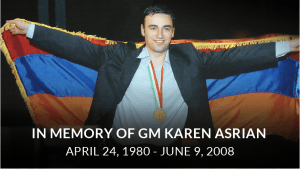
Karpov, Kasparov, Ivanchuk, and Kramnik were playing just ten meters away from me. The 32nd Chess Olympiad was in Yerevan, Armenia. I was seven years old, and with my father, every day, we would go there to watch the games.
I remember only one o...
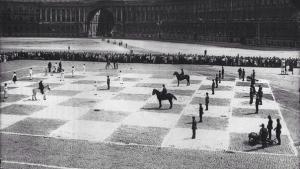
Chess in the Soviet Union got off to a slow start. In the 1910s, the Russian Empire had clearly been the coming power in chess, but between the war and civil war virtually all of the leading Russian players — Alekhine, Rubinstein, Nimzowitsc...