Hello,
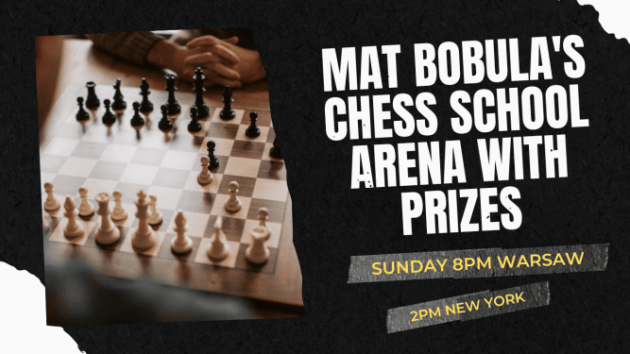
I would like to invite you to participate in our upcoming event with exciting prizes! Join the club: https://www.chess.com/club/mat-bobulas-chess-school
The Arena tournament follows a 5+5 format, lasting for 1 hour. It kicks off o...
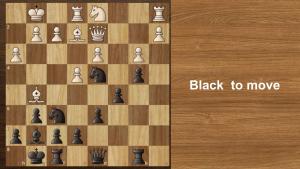
The last couple of months were very busy for me. I solved most of the challenges and I am back to playing, analyzing, creating exericises and sharing it with you. I am also available for coaching sessions. If you want to improve your chess and wou...
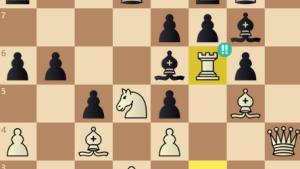
Hi!
I opened the Game review page yesterday and was in for a bit of a surprise - my three moves in a row were marked as Excellent by the computer.
Here's the game:
Thanks for reading!
#ruylopez #jaenisch #queentrap #dune #quickwins
chess noob Quick Wins! is a series of short videos, to demonstrate very quick wins! As a beginner, you become aware of the Scholar's Mate and the Fool's Mate, but neither of these sh...
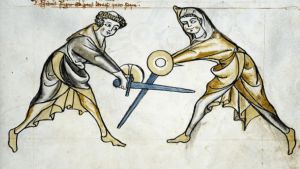
This is the first post in a series of the most typical mistakes I encounter as a chess coach. I thought it might be useful to share it on this blog.
OK, so let’s start with this one.
Defending against unsound attacks
It is one of th...

Karpov, Kasparov, Ivanchuk, and Kramnik were playing just ten meters away from me. The 32nd Chess Olympiad was in Yerevan, Armenia. I was seven years old, and with my father, every day, we would go there to watch the games.
I remember only one o...
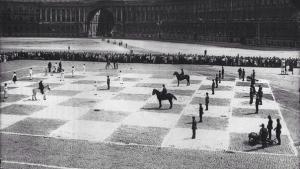
Chess in the Soviet Union got off to a slow start. In the 1910s, the Russian Empire had clearly been the coming power in chess, but between the war and civil war virtually all of the leading Russian players — Alekhine, Rubinstein, Nimzowitsc...
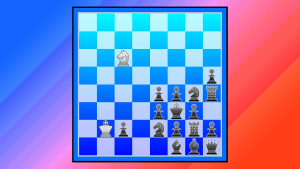
The name Dark Doings refers to composed problems in which the white force consists solely of the king and one other unit (if any), while Black possesses the full set of sixteen pieces. This maximum contrast in materials creates arresting diagram p...
#creepycrawly #michaelbasman #tactics
Every now and then, I encounter an opening I’ve never seen before. This is one of the great things with playing online chess!
This was a game of 15+10 rapid from last month where I was rando...
CCC22 Bullet will mark the final event in the CCC22 series. Stockfish has, in familiar fashion, dominated in both the CCC22 Blitz Event and CCC22 Rapid Event. Meanwhile, the race between Torch and Leela has never been closer. Torch won the Challen...
There’s a big part about Chessable coursers we sometimes forget – they’re living things.
They’re like books, in that they contain a lot of similar information to chess books. However, books don’t have video. books d...
In chess, it's really important to make a good plan. Every player has to figure this out during the game. You usually think about your plan right after the game starts, and a few more times later on.
There's a saying that it's better to have a b...
Background
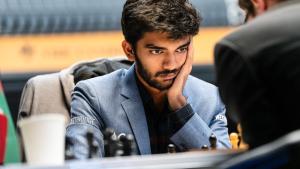
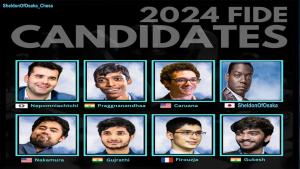
In a monumental turn, the chess world was rocked by the news of 17-year-old Gukesh's triumph in the 2024 FIDE Candidates, securing a remarkable 9/14. This victory has catapulted him into the spotlight as he prepares to challenge Ding ...
Sergey Voronkov has published a three-volume set of books titled
"Masterpieces and Dramas of the Soviet Championships".
These books are masterpieces of chess literature and chess history. Each chapters has, before the actual games shown, stori...
INTRODUCTION
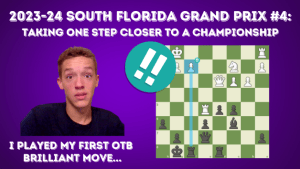
This is my recap of the fourth day of the 2023-24 South Florida Grand Prix tournament. I have participated in the first, second, and third days of this Grand Prix this year. I have had great results thus far, becoming co-champio...
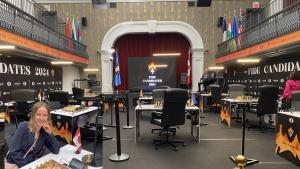
This April, Toronto emerged as the world’s most desired chess destination, pulling in enthusiasts from all over the globe. Hosting the FIDE Candidates event, the city metamorphosed into a little chess paradise, brimming with captivating side...
Since Magnus Carlsen's decision not to defend the World Chess Championship, two elite chess players had a rare opportunity to play for the title, which was previously held by 16 other persons at the end of FIDE's first 100 years. Last year, Ding L...
#viennagambit #maxlange #chessriposte
First, a proposition:
Casual recreational chess should be fun!- vitualis the Chess Noob
This is the philosophic position that I’ve adopted now while on my chess journey. Yes, I still w...
Hello, my fellow blitz lovers, and welcome to another edition of Blitz and Memes. If you're a fan of puzzles taken from amateur online blitz tournaments, then you have come to the right place, because that is what I do.
As always, the tactics ha...
Have you ever found yourself saying, 'I want to read more books' more often than you actually read? What do you think has changed in your life that led to this shift in your reading habits? I used to be like that - reminiscing about my childh...
Today, we announced that BetterHelp has partnered with Chess.com as an Official Partner of both the Champions Chess Tour and the Speed Chess Championship. We are excited about the partnership but felt it was important to address some of the more d...
#tactics #quickwins
chess noob Quick Wins! is a series of short videos, to demonstrate very quick wins! As a beginner, you become aware of the Scholar's Mate and the Fool's Mate, but neither of these show up in real games. H...
Dear Chess Friends!
When I was conducting the stream about London System at "Opening Roulette Tournament", I introduced my free webinars. These webinars are actually group lessons in Zoom. This is how you can register and enter them (read be...
A Step-By-Step Process To Getting In A 'Flow' State During Our Chess Games
Introduction
In this post, I will describe how to get in 'the zone' or 'flow' during our chess games.
'The Zone' refers to a state of complete focus and concentratio...
The candidates are well under way, drawing the interest and attention of chess enthusiasts all over the world. This penultimate event, leading into the next World Chess Championship, is a highlight for all chess players.
!! Watch the CCC Candida...